Showing posts with label Mississippi. Show all posts

Thursday, 21 June 2012

O Brother, Where Art Thou? (2000)


Dir. Joel Coen
Starring: George Clooney, John Turturro, Tim Blake Nelson, John Goodman


Another state, another Coen Brothers movie. They depicted 1980s Minnesota in Fargo; they depict 1930s Mississippi in O Brother, Where Art Though? The strange title comes from the 1942 film Sullivan’s Travels in which a Hollywood director dreams of making a socially relevant film about the Great Depression. O Brother is set in Depression-era America, though I’m not sure how socially relevant it is. 

This film is rooted in mythology. Everett Ulysses McGill (George Clooney) leads a break out from a prison work gang; accompanying him are Pete Hogwallop (John Turturro) and Delmar O’Donnell (Tim Blake Nelson). He claims to be leading them to where he hid $1.2million he stole from an armoured car. That story might not sound particularly recognisable, but it is loosely based on The Odyssey by Homer. Ulysses is the Roman name for cunning Odysseus who suffered all kinds of trials and tribulations as he struggled to return to Ithaca and his faithful wife Penelope. In the film Everett represents Odysseus; there is no buried pot of gold, he just wants to get back to his wife. Many of the strange characters they meet along the way correspond to other characters within the Odyssey. Everett’s wife Penny (Holly Hunter) is Penelope (although she has not stayed patiently weaving and waiting for him). The one-eyed club-wielding con-man Big Dan Teague (John Goodman) represents the Cyclops Polyphemus. They are seduced by three bathing women who represent the Sirens. When Delmar wakes to find Pete missing he is convinced that the women magically transformed his friend into a horny toad (much as the sorceress Circe turned Odysseus’ crew into swine). There is a blind seer (Lee Weaver) who prophesies that they will find a fortune, thought it be not the one they seek. The Governor of Mississippi is Menelaus “Pappy” O’Donaghue (Menelaus was one of the Greek leaders in The Iliad), currently engaged in a bitter gubernatorial election with the reformist Homer Stokes (Homer being the traditional creator of both Iliad and Odyssey). Even where the screenplay does not hint at classical parallels the dialogue is peppered with Latin phrases such as “bona fide” and “pater familias”. 

 
Yet it is not just classical mythology that influences the story. There is a more modern mythology too, the mythology of modern America. A whole host of archetypes of pre-war America (particularly the pre-war rural South) make an appearance. We have the prison work-gang from which Everett and Co escape. We have Tommy Johnson (Chris Thomas King), the Mississippi bluesman who sold his soul to the Devil at the crossroads in exchange for a supernatural skill at playing the guitar; I assumed this was a reference to Mississippi bluesman Robert Johnson, though apparently there was also a real-life Tommy Johnson who had the same story. We have a Depression-era bank-robber in the person of George ‘Baby-Face’ Nelson (Michael Badalucco) – even though Nelson never made it out of the Midwest. There is old time religion and there are Ku Klux Klansmen with the burning cross and an urge to lynch. And there is political chicanery. Both candidates are folksy sorts who surround themselves with campaigns of radio shows, traditional music and hokey stagecraft. Pappy (Charles Durning) is the representative of cronyism and “interests” - a different Pappy O’Daniel was a flour-baron governor of Texas at around this time. Homer (Wayne Duvall) is the Reform candidate armed with a brush who stands for “the Little Man” (complete with actual little man). This is a mythologised, legendary past. Notably at the film’s end the Arkabutla Valley is flooded to provide hydro-electricity. Everett scoffs at the credulity of his two accomplices and looks forward to a modern homogenised Mississippi powered by electricity which will light up the darkness and drive out superstition. “Out with the spiritual mumbo-jumbo and the backward ways. We’re gonna see a brave new world where they hook us all up to a grid. Yes, a veritable age of reason, like the one they had in France. Not a moment too soon.” And frankly the world is a poorer place without these myths and legends, superstitions and traditions. In France they brought about reason with the blade of the guillotine. The future might be bright, but we should reflect upon what has to be lost along the way. 

Folk music and blues play a constant part in the story, from the convicts beating time on the chain gang at the start to the mournful gravediggers at the end. Both campaigning politicians surround themselves with music. The escaped trio, together with Tommy, invent themselves alter egos as ‘the Soggy Bottom Boys’ to earn some money. Their harmonious recording of Man of Constant Sorrow turns out to be the treasure they walk away with. They become more popular than the politicians themselves. Likewise, the accompanying soundtrack album was even more successful than the movie. 

The Soggy Bottom Boys: the ZZ Top of the '30s

The pacing is fairly uneven. At first the script seemed to be just a series of vignettes – this is the scene in which they meet Pete’s cousin, this is the scene in which they see a baptism, this is the scene in which they meet Baby-Face Nelson and so on. Which is fair ‘nuff, as that essentially is what The Odyssey is: a series of travails and dangers that Odysseus and his crew have to overcome. Many of those different elements do get drawn together at the film’s climax however, so I’m glad I stuck with it. Visually the movie is instantly recognisable. The colour palette was digitally altered to give a sepia tone to the entire recording. It is easily identified as a Coen Brothers film. For a start it has John Goodman and Holly Hunter (both seen in Raising Arizona) in it. Secondly, there are some lines that could only have been written by them. Everett’s wordy patter (sample lines being “Pete, the personal rancour reflected in that remark I don’t intend to dignify with coment.But I would like to address you general attitude of hopeless negativism. Consider the lilies of the goddam field or…hell! Take a look at Delmar here as your paradigm of hope!”) are reminiscent of those spouted by Steve Buscemi’s Carl in Fargo. Both are men who believe themselves to be smarter than they really are. Yet Everett has a certain Odysseus-like cunning and a true love for his wife, whereas Carl is a sleaze who resorts to violence and whores. Once again, the cast have obviously gone to some lengths to perfect their regional accents. But I have to say that given the choice between re-watching Raising Arizona, Fargo or O Brother, Where Art Though? (or, indeed, their version of True Grit), I would go for O Brother, purely for entertainment value.

What have I learnt about Mississippi?
1930s Mississippi has it all – chain gangs, impoverished farmers, baptists, bluesmen, bank robbers, folk music, and feuding politicians. Oh, and the Klan. I think the three things that most struck me were the water, the music and the rope. It seems to be a state with plenty of water, be it the baptism lake, the river of the sirens, or the final flood. There is music everywhere, from fiddle-playing folk families to stentorian slave chants, to devilish guitar-playing. And there is the constant threat of summary justice; the noose looms large over Tommy and the escaped convicts. I was very interested to see the folksiness of political campaigns in the 1930s, where it was important to have a “constitchency” – but more important to have a catchy theme tune and an instantly recognisable schtick.  

Can we go there?
Well now, let me tell you that this film was shot in bona fide west Mississippi locations. The early scene where the convicts try to board a train before being given a lift by a blind seer were filmed up on the Columbus & Greenwood Railway. The Hogwallop farm was located near Hazelhurst. The baptism scene was filmed at Alligator Lake near Vicksburg. The radio station has since been torn down, but its radio mast still stands west of Valley Park. Baby-Face holds up the bank in Itta Bena; this was filmed at the old Bank of Yazoo City. The Sirens were encountered at D’Lo Water Park. Homer Stokes’s election rally was shot in the town square of Canton – as you can probably discover at the town’s movie museums. The neighbouring Woolworth’s was actually a number of miles away at Saxton’s Hardware in Yazoo City. The Governor’s mansion was located at the Cedars Plantation in Church Hill. The final banquet scene was shot in Vicksburg, at what was then the St Fancis Xavier Academy auditorium (now the Southern Cultural Heritage Complex, which seems like an appropriate place to visit). 

There are other locations named and not shown – like the real Itta Bena. Tommy wants to get to Tishomingo in the north-east of the state. And the Arkabutla Valley is now the location of Arkabutla Lake; they did indeed flood it.

Overall Rating: 3/5

Wednesday, 20 June 2012

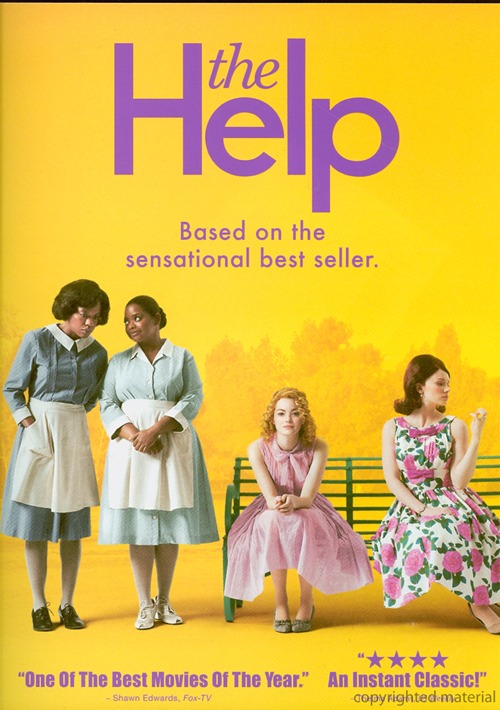
The Help (2011)


Dir. Tate Taylor
Starring: Emma Stone, Viola Davis, Octavia Spencer, Bryce Dallas Howard


In The Help reference is made to the character of Mammy in Gone With the Wind, and that no one ever asked her opinion. Well this is what The Help is. It is a film looking at the racial segregation that still existed in the South nearly a century later from the viewpoint of black house-servants. 

Except that those servants are not writing their own story. Wrongs are righted, but only because a crusading white woman persuades them to tell her their stories. Much like To Kill a Mockingbird or Fried Green Tomatoes… black characters can only get some measure of justice or respect because of an enlightened white character. Here that character is Eugenia ‘Skeeter’ Phelan (Emma Stone), back from university and itching to become a journalist. Her big idea is to interview some of the maids around town to see how they feel about being treated the way they are. This in itself is refreshing. Aibileen (Viola Davis) says “No one had ever asked me what it feel like to be me. Once I told the truth about that, I felt free.” Skeeter has very modern attitudes for early-‘60s Jackson. She sympathises with blacks (she becomes the first white to ever set foot inside Aibileen’s house), she wants a career, she is quite unfussed about finding a husband, and can even laugh when her mother suggests she might be suffering from “unnatural urges” (i.e. lesbianism) and need “a cure”. So hurrah for her.  

But she does not endanger herself by wanting to write this book. She merely faces ostracism. Any of the black servants participating in this risk being fired, arrested, or worse. Minny (Octavia Spencer) is blacklisted once she is fired. Yule May (Aunjanue Ellis) is beaten and arrested for theft. Aibileen had a son whose workplace death went unremarked, and the real-life killing of local black leader Medgar Evers provides a backdrop to some of the action. Nor do the contributors get much benefit. All they get is Skeeter’s advance shared between them; Aibileen herself is fired. Meanwhile Skeeter herself heads off for a new career as a writer in New York. There is a scene where Aibileen and Minny tell her to go because she has burnt all her bridges in Jackson, but one cannot help but compare the way she leaves the film, buoyed up by the servants’ gratefulness and her mother’s pride, with the solitary walk back to an empty house that faces the unemployed Aibileen. “In just ten minutes the only life I knew was done.” Skeeter’s life begins with her book. Aibileen’s ends. 

As one might notice, I have some issues with the central premise of the story. Is it historically the case that blacks had to be ‘saved’ by enlightened whites, or is it just that the original novel by Kathryn Stockett and this film were designed to appeal to white audiences? I felt that the movie started slowly and confusingly – although it certainly picked up pace in the second half – and that the various subplots around Skeeter’s love-life could have been successfully excluded. I found Skeeter quite un-engaging; it is only Emma Stone’s wilful gawkiness (such as her clumpy walk and frizzy hair) that saves her from being an annoying paragon. 

What saves the film is some great characterisation. Viola Davis is good value for her Academy Award nomination as the steady, nurturing, principled Aibileen, and Octavia Spencer is even better value as the sassy Minny (“Minny don’t burn fried chicken”). Some great character actresses are wasted in their roles – I’m looking particularly at Coal Miner’s Daughter’s Sissy Spacek as Hilly’s mother, and Allison Janney (of Hairspray and Juno) as Skeeter’s mother. Jessica Chastain provides heart and comic relief as the ditzy Celia Foote, a Marilyn-like blonde similarly ostracised from Jackson’s social circles because of the perception that she is “white trash”. Stealing the show, though, is Bryce Dallas Howard. Her Hilly Holbrook has to be one of the most unpleasant film characters of recent times. She is the queen of the mean cheerleaders - a snobbish, spiteful, patronising racist. As a leading light of the White Citizens’ Council she is the driving force behind forcing the help to use outside toilets (her concern being motivated by the fact that “they carry different diseases than we do”, and would thereby put their children at risk by using the same lavatory). She can be seen watching when Yule May is arrested and beaten by the police. Thankfully she gets her comeuppance, which leaves a very bitter taste in her mouth.

Minny's Mississippi Mud Pie:
the secret ingredient isn't love
There was a bit of a media frenzy when The Help was released, and it hoovered up lots of Oscar nominations. I may be out on a very lonely limb here, but I can’t help but think that this was largely due to the concept behind the film rather than the merits of the film itself. It’s human and humane and it looks at a time of great inhumanity in America – it’s precisely the sort of thing the Academy love. I am reminded of the exchange between Ricky Gervais and Kate Winslett in Extras that she wanted to do a Holocaust movie because she was desperate to finally win an Oscar… and the fact that she did finally win an Oscar for her role in The Reader, which was about the Holocaust. The film is fine… it’s just not great. I have heard some very positive comments about the source novel, however, so maybe I will enjoy that more if I read it. 

What have I learnt about Mississippi?
What struck me about this depiction of Mississippi in the early 1960s was that white people did not so much look down on blacks as a lesser race, but more that they looked at them as a lesser species. Hilly Holbrook’s insistence that black servants use separate toilets to prevent them passing on diseases to white children is one example; another is the casual way in which Aibileen’s son was dumped outside a blacks-only hospital following his accident. And this is not just the view of isolated individuals. White Citizens Councils were widespread and the actual laws of the state not just authorise segregation, they mandated it. Even to speak against racial segregation was a crime. One cannot help but feel that the State of Mississippi felt very scared of its black population.

And yet there was a clear reluctance of that population to stick their neck above the parapet. They had been successfully cowed by legal and illegal oppression. In the film Medgar Evers is shown speaking out against the situation; he is then shot dead. The church is shown giving the population hope, but counselling against action.

There was a clear class divide in Jackson. If one was black, the best one could hope for was a low-paid job as a servant, cook, or construction worker. One would live in a completely different area of town (literally across the tracks). No matter how well one saved, sending ones children to college would be economically impossible. 

It was interesting to see that the Mississippi state flag incorporated the Confederate ‘stars and bars’ – i.e. it incorporated the flag of an institution that fought to preserve slavery. And one might say that not much has changed – one servant talked of being left to her owner’s daughter in her will. 

There were good white employers. White children obviously did develop attachments to their black nursemaids. One story about a doctor buying a patch of land just so his maid could take a short-cut to walk was particularly touching. And Celia and Johnny Foote are genuinely hospitable towards Minny, treating her as a friend. In fact, early in their relationship it is quite clear that Minny is made uncomfortable by Celia’s refusal to respect traditional master-servant boundaries. 

Can we go there?
The Help is firmly set in Jackson, Mississippi. And while the film was shot on location in Mississippi, only a few genuine places in Jackson made it to the screen – the New Capitol Building, where Skeeter goes to find the laws on segregation, the Mayflower Cafe, where Skeeter and Stuart have their date, and Brent’s Drugs.

On the whole the screen ‘Jackson’ was actually Greenwood, about 100 miles further north. The wonderful folks at the Visitors Bureau there have helpfully put together a map identifying which locations were used. So, for instance, the Whittington Farm was used for the exteriors of the Phelan farm and a residence on River Road for the interior, the Hollbrooks lived on Grand Boulevard and the Leefolts on Poplar Steet. The bus stop was at Little Red Park, and the church used was the Little Zion Church on County Road 518. The scenes at the Jackson Journal were filmed in what were the offices of the Clarksdale Press Register in Clarksdale until 2010. 

Overall Rating: 3/5

Sunday, 17 June 2012

In the Heat of the Night (1967)


Dir. Norman Jewison
Starring: Sidney Poitier, Rod Steiger, Warren Oates, Lee Grant 


In a small Southern town a murder is committed. The quest to find the killer brings two very different police officers into a temporary and uneasy alliance. And it is this relationship that defines In the Heat of the Night 

Following the discovery of the murder Chief of Police Bill Gillespie (Rod Steiger, who won the Academy Award for his performance as the prickly police chief) orders a search be carried out for hitch-hikers. One of his officers finds a black stranger at the railroad station and takes him in. This man is Virgil Tibbs (Sidney Poitier), and it turns out that he too is a policeman from Philadelphia – a homicide expert no less. Tibbs is urbane and well-dressed, clever and educated, Northern, black, and considerably better paid than Gillespie. He also has a touch of arrogance about him. In short, he is everything that Gillespie is not. He seems almost tailor-made to antagonise the swaggering Southern police chief. One of the best examples is early on when Gillespie is still convinced that Virgil killed Mr Colbert. “Whatcha hit him with?” “Hit whom?” “WHOM?” Frankly, folks from Sparta don’t use the word ‘whom’ 

Sparta, Mississippi, is a town in which the racial divides of the ‘60s are not far away. The town authorities are all white, and the whites are distrustful of blacks. Blacks are routinely referred to as “boy”. Gillespie at first refuses to believe that a black man could come by $100 honestly. Harvey (Scott Wilson, yet another murder suspect after his turn in In Cold Blood) asks the suited Virgil how come he is wearing white man’s clothes. Endicott (Larry Gates) runs the cotton plantation; he is cultured and seemingly paternalistic, but he believes that “negros” need to be cultivated over time and mourns the fact that he could once have had Virgil shot. The town mayor also comments that Gillespie’s predecessor would have shot Virgil. The diner refuses to serve Virgil, and car loads of good ol’ boys come to give him a taste of Southern hospitality. 

But they are not the only ones holding prejudices. Virgil too clearly dislikes these sweaty rednecks; his chief in Philadelphia asks him whether he is prejudiced against the locals. When Gillespie realises that he does need Tibbs’ help he goads him cleverly, betting that he would just love to get one over on the Sparta police: “you’re just so damn smart. You’re smarter than any white man. You’re just gonna stay here and show us all. You’ve got such a big head you could never live with yourself unless you could put us all to shame. You wanna know something, Virgil? I don’t think you could let a chance like that pass by.” For a long time Virgil holds to the belief that Endicott is the eminence gris behind the murder, only to admit that he just wanted that to be the case. But he, a wealthy and educated Northerner, is further away from the local black population than the white townsfolk are. Quite simply, he has nothing in common with them other than his skin colour.  

The relationship between him and Gillespie is hence firmly rooted in dislike. But Gillespie is not a homicide expert, so he needs Tibbs’ expertise. Tibbs is calm and methodical; Gillespie has a hair-trigger temper and is prone to locking people up on the slightest provocation and then looking to make the facts fit the judgement (he arrests three innocent men before Virgil brings him the right one). He collects Virgil from the station. When he next tells his new partner to get out of town it is motivated by concern for the man’s safety. By the time Virgil does finally leave the culprit has confessed and a mutual respect has been forged. And in the mean time a blow has been struck for civil rights. Literally. When Endicott slaps Virgil, Virgil slaps him right back. This was unprecedented for the time: the black man raising a fist against his oppressors. There may well have been a lot of communities like Sparta that suddenly felt very nervous about that…

"One - two - three - four - I declare thumb war..."

In the Heat of the Night justifiably deserves to be called a classic. The black man is not a supporting character, the black man is the hero. The black man does not sit idly by bemoaning his fate while waiting for an enlightened white to save him, the black man is perfectly able to shape his own future and demand respect. This is not news in today’s cinema: can you imagine someone slapping Samuel L. Jackson, and him not fighting right back? But for the ‘60s, when civil rights were very much in the news, it broke new ground. 

What have I learnt about Mississippi?
Mississippi in the 1960s was no place to be black. Wages were even lower than those of whites, they might not be served in certain establishments and they were liable to be arrested on spurious charges. “There’s white time in jail and there’s coloured time in jail. The worst kind of time you can do is coloured time.” Meanwhile town authorities were racist and mobs of white locals could be trusted to put uppity blacks in their place. A Confederate bumper sticker means trouble for any passing non-white.

The state abuts the Mississippi River, across which is Arkansas. The Gulf, Mobile & Ohio railroad links the South up to Memphis. And it gets sticky, sweaty and humid… particularly during the heat of the night… 

Can we go there?
There is a Sparta in Mississippi, in Chickasaw County to the north-east of the state. This is not the Sparta of the movie. The real Sparta is a mere village, and certainly would not be a spot for transferring trains. The fictional Sparta seems to be fairly sizeable, and has a bridge across the Mississippi to Arkansas. 

In the Heat of the Night was filmed in Sparta – Sparta, Illinois. Due to its contentious subject matter Sidney Poitier was reluctant to film in Mississippi. Sparta is in the south of Illinois. Nearby can be found Chester, where a bridge that actually does cross the Mississippi was used for the police chase. Compton’s Diner was filmed in Freeburg further north and was a genuine greasy spoon before it was torn down. Endicott’s plantation house was located on Pennell Lane in Dyersburg in north-west Tennessee. The greenhouses added specifically for filming were demolished by a tornado in 1997. The cotton fields at Boals’ Brothers Farm in Tiger Tail nearby were also used in the film.

The Old G.M.O Depot in Sparta is now the Misselhorn Art Gallery; it has a permanent display on the filming of the movie.

Overall Rating: 3/5

Saturday, 16 June 2012

Week 25: Mississippi

"You don't have to live next to me,
 Just give me my equality!
 Everybody knows about Missisippi,
 Everybody knows about Alabama,
 Everybody knows about Mississippi Goddam!"
 - 'Mississippi Goddam',
 Nina Simone

From Minnesota, source of the mighty Mississippi River, we are travelling down its length - possibly by one of those cool old paddle steamers - to its delta territories. Not quite to its end (that would be back in Louisiana), but the next best thing is the state of Mississippi itself.


Mississippi (the river) borders Mississippi (the state) along its western border. The eastern border is Alabama, where we started off way back in January. And that twosome tends to stick in the mind for all the wrong reasons. These two states were the heart of racial segregation and oppression from the 19th century slave plantations, through the era of Jim Crow laws, up until the civil rights struggles of the 1950s and '60s. And unlike Alabama it doesn't have a Lynyrd Skynyrd track to deflect attention away from this shameful past. But it has given the world the Blues, and the cross-over icon of the century Elvis Presley. And it ain't no slouch when it comes to that fancy-pants book-larnin' either, counting both Tennessee Williams and William Faulkner among its sons.

But it's no surprise that Hollywood has chosen to focus on the race angle when setting films in th Magnolia State. I don't particularly want to dwell on racial intolerance to the exclusion of everything else about Mississippi however, so I've tried to find at least one film that isn't about civil rights. So that means that Mississippi Burning has had to be given the old heave-ho to make way for something else.

My three chosen films are:
  • In the Heat of the Night (1967)
  • The Help (2011)
  • O Brother, Where Art Thou? (2000)
So carve yourself up a big ol' slice of Mississippi Mud Pie and pull up a seat. We've got some movies to watch!