Showing posts with label Alabama. Show all posts

Tuesday, 3 January 2012

Sweet Home Alabama (2002)


Dir. Andy Tennant
Starring: Reese Witherspoon, Josh Lucas, Patrick Dempsey, Candice Bergen

Sweet Home Alabama is never going to win any awards for originality. Melanie Carmichael (Reese Witherspoon) is an up and coming fashion designer in New York City, tipped as ‘the one to watch’ – and this is before Andrew Hennings (Patrick Dempsey) the playboy son of NYC’s mayor proposes to her in Tiffany’s. There is just one small problem – Melanie’s background is a lie. She grew up as Melanie Smooter in Pigeon Creek, Alabama, was a teenage tearaway – oh, and is still married to her childhood boyfriend Jake (Josh Lucas). Cue a trip away from the bright lights of the big city and into the Deep South to get Jake to sign divorce papers. Along the way she reconnects with her roots and reassesses what is truly important to her. The ending should come as no surprise to anyone who has seen even one romantic comedy before.

Yet for it to be a successful romantic comedy I would say that it requires two key ingredients: romance and comedy. And Sweet Home Alabama does not particularly deliver on either of those points. There are elements of romance – but the main one is Andrew’s proposal in Tiffany’s. He’s the wrong guy! In comparison Jake is resolutely unromantic – he and Mel originally got married because she was pregnant, and he was so drunk at their wedding he threw up down her dress and missed the reception. There are moments that the writers clearly felt hit the mark such as Mel’s kissing of Jake at the graveside of their dog (I’m not entirely sure why she suddenly does that) or her seeking him out on a storm-lashed beach (where I was at the very least expecting a bolt of lightning and a comment along the lines of “Maybe lightning does strike twice”). Both these moments are instigated by Melanie, not Jake. Nor are there any particularly noteworthy comedy performances – though Candice Bergen as the hypocritical mayor of New York does grab the lion’s share of what there is (sample: “There is nothing wrong with poor people. I get elected by poor people”). Pigeon Forge is populated by a cast of people who almost verge on cliché but who just fall short. This is no Craggy Island populated by local eccentrics, save for one elderly Confederate colonel who spends his time blowing up anvils. The townsfolk are her friends, friends who missed her. They are tolerant and forgiving. Even when a drunken Melanie outs former best friend Billy Ray (Ethan Embry) in the local bar he forgives her. If anything the film is a confused morality tale – don’t go chasing after your dreams ladies, and if you do, make sure you come back home to settle down and be a baby-mama afterwards.
  
 
A dumb stubborn redneck hick and a hoity-toity
Yankee bitch - it'll never work!

What have I learnt about Alabama?
Well, all the clichés are there – mullets, screen doors, line dancing, women with four children, names like ‘Lurlynn’ and ‘Billy Ray’. Hell, even the ghosts of the South make an appearance in a Confederate re-enactment troupe in which Melanie’s father is a member. But the local characters never quite turn into caricatures: “Just ‘cause I talk slow doesn’t mean I’m stupid!” They are left stranded half-way between normality and eccentricity.


Alabama is defined by what it is not – specifically New York. The lakes and community festivals of Pigeon Creek are a world away from the graffiti and red carpets of NYC, and that’s just the way they like it. The folks back home take more time over local interaction (the local bank won’t install an ATM because it might lessen face-to-face contact); in comparison the New Yorkers appear brusque, selfish and rude. This is particularly the case with the angling politico mayor but also Melanie herself. “How can you live like this?” she asks her former friends. She calls Jake a “dumb stubborn redneck hick”; in return he calls her a “hoity-toity Yankee bitch”.
Really, the film could have been set anywhere away from the big city. It’s a basic story contrasting southern hospitality with Yankee brashness. It just so happens that there is a famous song called ‘Sweet Home Alabama’; if there had been a smash hit called ‘Sweet Home South Carolina’ the movie might have been set there instead. The setting isn’t important; the moral is.


Can we go there?
I remember an American tourist advert encouraging us to go to different places in the US and not just New York / Las Vegas / California / Florida. It did this by showing scenes from movies mentioning the states. One of these was Sweet Home Alabama. They obviously learnt well from Mel’s lies about her background because actually only a very few shots of Alabama exist in the movie. The rest of the locations used for her Alabaman home town of Pigeon Creek (which is supposedly near Greenville) were in – you guessed it – Georgia. Crawfordville, east of Atlanta and half-way towards Augusta, was the main stand in, though the Carmichael Plantation, that Melanie claims to be her home, is actually called Oak Hill and is well north-west of Atlanta in Mt Berry.


Overall Rating: 1/5

To Kill A Mockingbird (1962)


Dir. Robert Mulligan
Starring: Gregory Peck, Mary Badham, Philip Alford, Robert Duvall


When the American Film Institute named its greatest movie heroes of the twentieth century it did not pick a brave soldier, a dashing spy, a maverick cop or a gallant superhero. Its greatest hero never killed or even fought anyone. He was a widowed small-town lawyer who was shown fighting one case – which he lost. But To Kill A Mockingbird’s Atticus Finch was invested with such dignity, humility and goodness by novelist Harper Lee, screenwriter Horton Foote and actor Gregory Peck that it seems impossible to imagine who else would have been a better choice. In an era when lawyers are respected only slightly more than bankers or politicians it is gladdening to see a depiction of one quite so fundamentally decent. His reason for taking on the court-case of Tom Robinson (Brock Peters), a black farmhand accused of raping the white Mayella Ewell (Collin Wilcox) is simple: “If I didn’t, I couldn’t hold my head up in town.” Peck, by all accounts, embodies Atticus’s finer points. When he won the Academy Award for Best Actor he was wearing a watch that once belonged to Harper Lee’s father, a present from the novelist. He said the watch meant more to him than the statuette.


Peck’s Oscar-winning portrayal of the quiet, noble Atticus is central to the film’s success. His white linen three-piece suit and pair of spectacles are now iconic. He has become a model of the noble lawyer, doing what is right and damn the consequences. The moment when he loses his case and is left alone on the courtroom floor to pack up his bag brings a lump to the throat. Silently the black townspeople segregated in the gallery rise to their feet. The Reverend Sykes (Bill Walker) instructs Scout “Jean-Louise, stand up. Your father’s passing”. It is a fitting salute.
 

Black and White and Red-Neck all over:
Tom, Atticus and Mayella in court
 
Yet the film does not solely focus on Atticus. In many ways the trial takes up only a small segment of the storyline. It is something that rumbles along in the background like a far-away storm; occasionally you become aware of its presence but it is a long time until it breaks overhead. Instead the film centres on Atticus’s two children, Scout (Mary Badham) and her elder brother Jem (Philip Alford) and their friend Dill (John Megna). They roam around their hometown of Maycomb, Alabama, telling stories about the townsfolk: Miss Dubose (Ruth White) carries a Confederate pistol, and Boo Radley down the street is sort of an all-purpose bogeyman. However, their games and stories are done out of a sense of innocence. This innocence is established at the very opening of the film – the titles come over a child’s drawing and singing. I suppose the lesson is that hatred has to be taught and learnt. The job of a father must be to protect his children from as much of the bad stuff as possible. When Boo Radley (Robert Duvall, in his first film role) is finally revealed as the children’s angelic-looking saviour he, too, shares that childish innocence. Doing anything cruel to an innocent, much like killing a mockingbird, is the one sin people are not willing to commit. Atticus did not want the children present as he kept his solitary vigil outside Tom Robinson’s cell and he was willing to face down a lynch mob alone. However in all probability it was their presence and Scout’s innocent conversation with Mr Cunningham (Crahan Denton) that saved the day. Lynchings are done in private; they are not done in front of seven-year olds. The townsfolk just could not bring themselves to expose children to something like that.


Mockingbird was, like Fried Green Tomatoes, set in the 1930s. However, by the time the latter was released in 1991 racial segregation was history; it was still a live issue in the South in 1962. George Wallace won the Alabama governorship that year running on a segregationist platform. The release of To Kill A Mockingbird can hence be seen as a bold act by Universal. If I wanted to be critical however, I would point to the early days of a popular-culture trope. Atticus, the sheriff (Frank Overton) and the judge (Paul Fix) - the men in suits - all know that the trial result is wrong; the miscarriage of justice is down to the denim-dungaree-clad jurors. ‘Whites’ per se are not the villains – it is the poor, ill-educated, prejudiced section of the whites that are the villains – as exemplified by Bob Ewell (James Anderson). Ewell – like Bennett in Fried Green Tomatoes – is a violent drunk as well as a racist. The bad guys are the ‘poor white trash’. In both films the heroes are whites who step in to offer friendship and support to the blacks. It would be nice to see a film showing blacks empowering themselves rather than sitting meekly by. Though as Big George knew, and Tom Robinson sadly found out, attempting to do so could lead to far worse consequences. 


What have I learnt about Alabama?
Life and society in 1930s Alabama was rigged against blacks. Even where they found enlightened lawyers, sheriffs and judges – as in Maycomb – they still had racist juries to contend with if they managed to escape extra-judicial lynchings. Mind you, even the ‘good guys’ were able to bend the law to their own ends too, as Sheriff Tate does in the film’s coda, ruling that Ewell fell upon his own knife to protect Boo Radley. “Maybe you’ll tell me it’s my duty to tell the town all about it and not to hush it up… I may not be much Mr Finch, but I’m still sheriff of Maycomb County and Bob Ewell fell on his knife.” Yet despite this, for the young, for the innocent, it was still a paradise, when the days seemed longer, the summers seemed hotter, and adventures could be found just down the street.


Can we go there?
I’m afraid not. The inspiration for Maycomb was Harper Lee’s own hometown of Monroeville, Alabama (maybe halfway between Montgomery and Mobile). As Gregory Peck commented, the community she portrayed could have been anywhere in America. The actual film was shot at Universal Studios’ backlot in California, with the town of Maycomb, including over thirty buildings, being created there. However the courthouse was indeed modelled upon that in Monroeville, and Lee’s hometown (which also happened to be the hometown of Truman Capote, upon whom the character of Dill was based) gets a steady stream of visitors due to its connection. Every spring an amateur stage production of To Kill A Mockingbird is performed in the grounds and interior of the courthouse.


Overall Rating: 4/5

Monday, 2 January 2012

Fried Green Tomatoes at the Whistle Stop Café (1991)

Dir. Jon Avnet
Starring: Kathy Bates, Mary Stuart Masterson, Mary-Louise Parker, Jessica Tandy


At the end of the film Fried Green Tomatoes at the Whistle Stop Café the character of Ninny Threadgoode states “I found out what the secret to life is: friends”. And to me that is what this movie is about: friends, or – more generally – community.


The Depression-era village of Whistle Stop, Alabama, is rich with a sense of community. Ninny reckons that the trackside café owned by Ruth (Mary-Louise Parker) and Idgie (Mary Stuart Masterson) was at the heart of the community, but that concern for and support of the other townsfolk is evident at times of stress. Hobo Smokey Lonesome (Tim Scott) is given shelter and compassion. Reverend Scroggins (Richard Riehle) lies in court to protect his frequent tormentor Idgie and Big George (Stan Shaw). And while it is made clear that Idgie’s would-be suitor Sheriff Grady Kilgore (Gary Basaraba) is a member of the local Ku Klux Klan who does not appreciate the local blacks dining at the café he steps up to defend George when the town is invaded by Klansmen from Georgia.


It is, however, the friendship between tomboy Idgie and battered wife Ruth that forms the real emotional core of the film. Their friendship is a real partnership of souls despite their very different outlooks on life. In the original novel of the same name upon which the film was based the author Fannie Flagg makes the nature of their relationship clearer. I’m not sure what the female equivalent of ‘homoeroticism’ is but upon release the film was criticised for underplaying it. That may be the case, but it would take a very blinkered soul not to read an entire story in the wonderful expression Masterson paints on Idgie’s face when Ruth drunkenly kisses her on the cheek.


Idgie and Ruth, proving that opposites do attract


The internal story about interwar Whistle Stop is, however, framed within a certain narrative device. In the modern-day Kathy Bates’s frumpy, dumpy housewife Evelyn Couch (even the name brings to mind a sedentary, overstuffed individual) is regaled with tales of long-gone Whistle Stop by nursing-home resident Ninny (Jessica Tandy). These stories spark a fire of devil-may-care individuality within Evelyn. As the film progresses she loses the timidity and curlers and picks up a power-suit and a sledgehammer. While Ed Couch (Gailard Sartain) is not physically abusive like Ruth’s husband Frank Bennett (Nick Searcy) he is certainly emotionally negligent, his set routine consisting of coming home, picking his cooked dinner up from its place on the table, and crossing over to the TV to watch sport. Towards the end we begin to see that the feistiness Evelyn has picked up from Idgie may be the key to turning their marriage around.


Despite that, the modern-day element does not work. There is a disconnect. The start of the story is too obviously literary. I thought that I was really going to hate the film. Once the characters were established and Ninny’s narration is cut back the central tale sang along for itself. But I felt that every transition back from the drama of love, death and race to the comedy set-pieces of the modern-day (the self-help group being asked to examine their vaginas with mirrors, Evelyn smashing a hole in her wall with a sledgehammer, Evelyn falling in love with road rage when pipped to a car park spot) was clumsily managed. The two different tones jarred. May be it was partly because I have never before seen Kathy Bates play anything other than a ballsy take-no-prisoners sort of character before – seeing her as a repressed and suppressed housewife took some getting used to. The modern soundtrack of Paul Young and Jodeci also served to distract from the real meat of the tale. I might also say that I found the revelation of what actually happened to Frank Bennett quite stomach-turning.


What have I learnt about Alabama?
Certainly in the idealised town of Whistle Stop there is a sense of community – a community that has vanished with the closure of the café and the cessation of rail services. Like Ninny’s condemned house, it belonged to an era that is now gone. There were race issues – though none apparently in the present day. The blacks could cook at the Whistle Stop Café but they had to eat out back, and Grady has a matter of fact attitude to the notion that if Big George were to go to trial in Georgia for killing a white man he would be hung (or is ‘lynched’ the operative word?). Perhaps most upsetting is the ‘boy’-‘sir’ exchange between the bullying Curtis Smoote (Raynor Scheine) and the subdued George. Yet the dislike of strangers is stronger still. Or possibly, it’s just the dislike of Georgians, none of whom (with the possible exception of the judge) are portrayed at all sympathetically. Frank is by turns smarmy, violent and drunken. Smoote is an unpleasant, greedy weasel of a man who rejoices in his position of authority. And the court prosecutor is a bombastic, blinkered demagogue.


Can we go there?
Yes you can! The Whistle Stop Café is open for business, and, yes, they do serve fried green tomatoes – though I may steer clear of ‘Bennet’s Barbecue’… The entire main street of ‘Whistle Stop’ has been preserved as a tourist attraction. Yet while the fictional town was supposedly based upon Irondale, on the outskirts of Birmingham, Alabama, the film was not shot there. Grady Kilgore and his boys must be turning in their graves, but the film was shot in the town of Juliette. In Georgia. Roughly half-way between Atlanta and Macon. Ouch. Bizarrely enough Juliette also stood in for Alabama in a couple of scenes from the film The Tuskogee Airmen. Although in the film A Killing Affair it was in West Virginia. How confusing!


Overall Rating: 2/5

Sunday, 1 January 2012

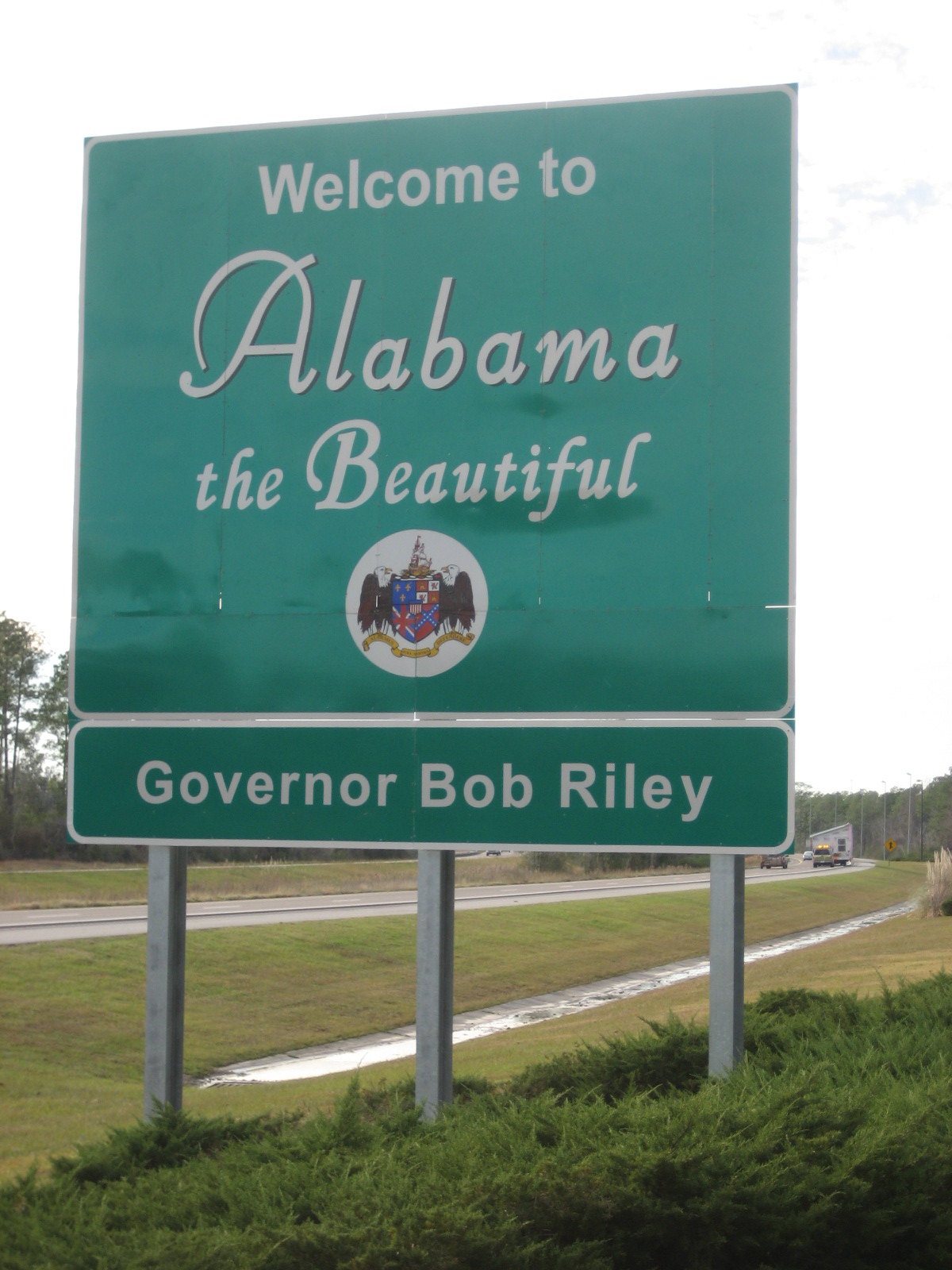
Week 1: Alabama


"Singing songs about the Southland
I miss Alabama once again..."
- 'Sweet Home Alabama',
        Lynyrd Skynyrd


Happy New Year!

It's week one of the United States of Cinema, and Lovefilm have come up trumps following my hasty signing up on Wednesday night. I'm starting off with the state of Alabama, a state that I suppose to outsiders' eyes gets lumped in with the rest of 'the South' (i.e everything east of Texas and south of Washington that isn't Florida or New Orleans). I think of a history of racial tension and good ol' boys out back pickin' at their gee-tars.

The three films I have chosen to watch to bring Alabama to life are:
  • Fried Green Tomatoes at the Whistle Stop Cafe (1991)
  • To Kill A Mockingbird (1962)
  • Sweet Home Alabama (2002)